When The Caregiving Ends
Jun 22, 2025
Nobody tells you what it feels like to be alive in the aftermath of being a full-time caregiver to someone who did not get better.
When someone is diagnosed with a big illness, the focus shifts entirely to them. When a life hangs in the balance, everything else falls by the wayside, as it should. Walking someone home is the greatest, most monumental thing we as humans will ever do.
When you are a caregiver, you become superhuman because you have to. You develop an uncanny capacity to keep going and remember medical details that no one else could keep straight. You do things you never thought you'd be able to do.
Worry becomes your constant companion. You learn that you are also an unbelievable advocate. You find yourself obsessing over medication schedules. You witness unspeakable suffering, and your heart aches with the inability to take this pain away. You wonder if it should have been you.
Your relationship with your person changes. You become fiercely protective of them. Their vulnerability something you feel personally responsible for honouring. You sleep with one eye open. There is no time to grieve the loss of your protector, your safe space, your anchor.
When Brian died, I didn't know what to do with myself. Trying to save his life and then walking him to the other side had given me direction. It was excruciating, but I knew it was the most meaningful task of my life. The aftermath was aimless, devoid of any purpose. I felt a deep sense of dread, a lack of hope, and an overwhelming feeling of "What's the point?"
The transition from caregiver to widow is one I don't think we identify enough. There is an intimacy developed when we go through a death process together, one that supersedes the experience of other couples around us, and then suddenly we're alone, seen as "single" by the world. It's a piece we don't talk about enough.
For us, it happened slowly, but also all at once.
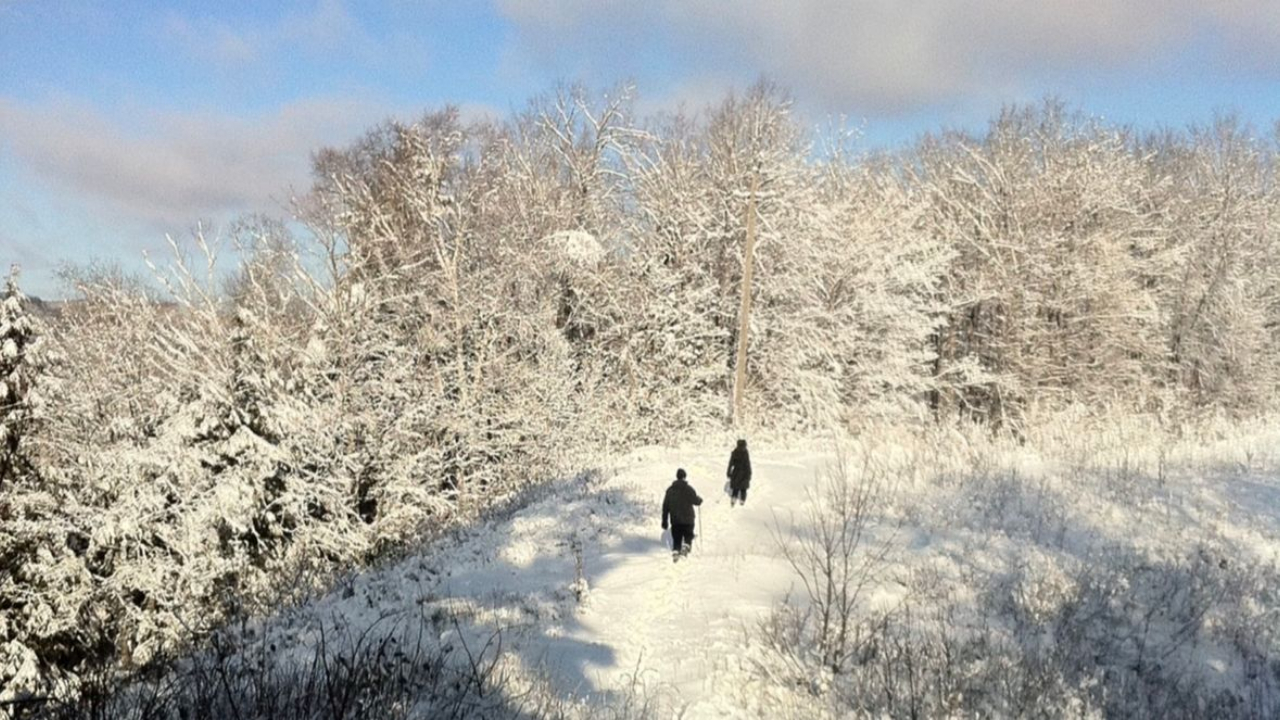
One moment I was leaning on him in the forest, as the Winter Solstice snow fell around us – dreaming together about our future. Blissful, like everyone else.
And the next I was doubled over in a pharmacy, filling an urgent prescription for the strongest of pain meds. Worried about leaving him alone. Trying to decide if we needed to spend the night in the ER.
It’s funny how natural the most unnatural shift in a shared life can feel.
How we can rise to the occasion & find ourselves doing things we once had the luxury of thinking we couldn’t do.
But nobody speaks about the listlessness when the constant doing of caregiving ends.
About the way our nervous systems entirely rewrite themselves around a need to be super-human.
About the greyness of life after you’ve been at the centre of a flame with your person.
The first widows retreat I ever ran, we were sitting in the sauna together when our conversation meandered towards the topic of caregiving – and of the “after”.
“I didn’t know other people felt this way too,” one woman said.
Other heads nodded in silent understanding. Those whose spouses died suddenly, sat around us holding space with reverence & love.
Later we’d hold space for them too, for the shock & trauma of the split-second loss.
I felt a bubble of protection around us. The invisible circle of our partners holding hands. Here we were, these women who’d had to hold it all in a way no one ever should. And in our coming together, the weight didn’t feel quite so heavy anymore.
I’ll never forget that moment.
I hope you know that if you've been through this too - you're not the only one.